With global connectivity and geopolitics increasingly intertwined, we sat down with
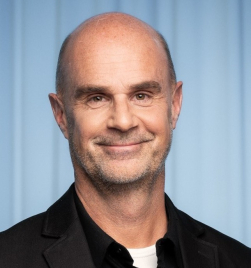
Peter Borsos, Head of Communications at Ericsson, who recently relocated to Washington, D.C. We discussed how Ericsson navigates communication challenges in a rapidly changing world. Borsos shared insights on breaking down communication barriers across cultures and sectors, and how Ericsson is adapting its global strategy amid shifting geopolitical dynamics.
Ericsson operates all over the world, what are the main communication challenges that come with being such a large and global company?“There might be larger telecom companies out there,” Borsos begins, “but none match Ericsson’s complexity and scale.” With nearly 100,000 employees and operations in almost every country in the world, the company’s communication challenges are as global as its technology.
Operating in so many markets also means facing scrutiny for choices that are interpreted differently around the world. For instance, corporate donations or partnerships that seem natural in the U.S. might draw criticism in Europe. “We’re present in markets with very different values,” Borsos says, “but we see access to communication as a human need. Our role is to provide connectivity, not to adopt the politics of every country we operate in.” The United States is Ericsson’s single most important market, one it cannot afford to fail in. Bridging the communication gap between the U.S. and Europe, Borsos explains, requires an understanding of both cultures: “We need people who can connect those worlds and navigate the different ways business and communication work.”
How has the role of geopolitics changed for companies like Ericsson in recent years?“In today’s world, geopolitics is no longer a background concern, it defines nearly every strategic decision. A few years ago, geopolitics was barely discussed. Now it’s everything. It’s about security, infrastructure, and trust.” Borsos says. Ericsson’s goal, he explains, is to be a trusted vendor globally, not just in the West, despite political tensions across the world. “We’ve existed for 150 years, 120 of those in the U.S. We think long-term, far beyond political cycles. We’ve seen more presidents come and go than most American companies.”
Still, political instability and polarization make things harder. “Most companies want predictable rules, not constant changes in taxes, tariffs, or regulations. Give us stable conditions and we’ll adapt. It’s hard to plan when the rules shift every day.” However, despite global uncertainty, Borsos is optimistic about the relationship between Sweden and the United States. “It’s a fantastic relationship,” he says. “Swedes sometimes forget how small we are, yet we’ve done incredibly well. We’re overrepresented globally for our size, but we’re not the center of the world, we need to be able to adapt to global changes” Ericsson’s long history in the U.S. is a reflection of the countries’ enduring bond. “Our relationship has ups and downs, but it’s long-term and healthy,” Borsos says. “There’s a constant rotation of Swedes and Americans within the company, a true exchange of knowledge and culture that strengthens both sides. Today, Ericsson is responsible for more than 6,000 jobs across the United States, and that partnership continues to grow.”
Connectivity and competitiveness in EuropeBorsos is outspoken about Europe’s struggle to keep pace with digital and telecom innovation. “If you land in New Delhi, you can have a flawless video call all the way from the airport to your hotel,” he says. “Try that in a European capital, almost none can match that level of connectivity.” He argues that Europe has become too cautious and slow-moving. “Europe wants to regulate before innovation happens. The rest of the world regulates afterwards. Somewhere along the line, we lost the speed that drives progress.”
With multiple small markets, fragmented regulation, and political processes that vary across 27 countries, the EU struggles to act at scale. “Infrastructure is expensive,” he explains. “Half a billion people should make Europe a strong internal market, but when every country insists on its own rules, we lose our edge. Sweden has four telecom vendors, Denmark three, and France four. All trying to keep prices low, but at the cost of development. Meanwhile, the U.S., with 350 million people, has three major vendors, and India and China, with over a billion people, has just three as well. Europe’s fragmentation makes it impossible to compete at that scale.” He stresses that Ericsson wants to help Europe catch up. “We’re one of the few major tech companies left in Europe. We want Europe to rise again. Connectivity isn’t just a technical issue, it’s about economic strength and competitiveness.”
What advice would you give to young professionals starting their careers today?Every generation believes it’s harder to succeed than before, Borsos reflects, “but there are also more opportunities than ever.” The key, he says, is to listen. “You’re no longer competing just with the people around you, but with the whole world. Don’t think you know everything. Listen. Try to understand deeply.” He admits he learned that lesson early. “When I first joined an executive team, I thought I could fix everything, that I had all the answers. A month later, I realized how complex things really were. Leadership is about respect, listening, and constant learning.”